
Correct equipment for the instrument type
Uprights and grands move differently. We use piano dollies, skid boards, straps, corner protection, and padding based on the piano's size, weight distribution, and the route.
Serving Richmond Hill, Ontario & surrounding areas
Mon–Fri 8am–6pm Sat 9am–2pm
Piano moving service · Richmond Hill
Move your upright or grand with the right equipment, trained handling, and a plan for tight halls, stairs, and condo elevators so it arrives level, protected, and in tune-ready condition.

If you are searching for piano movers Richmond Hill, you are usually trying to protect two things at once: the instrument and the property around it. Pianos are top-heavy, sensitive to impact, and awkward through doorways. The right move comes down to controlling tilt, weight distribution, and vibration, then protecting floors, walls, and railings the entire way.
Richmond Hill Moving Company handles local piano moves across Richmond Hill, ON, including upright, studio, console, baby grand, and full grand sizes. We plan the route first, measure pinch points, and decide whether the safe approach is a ground-level roll, a controlled stair move with a skid board, or careful handling through condo common areas.
Richmond Hill has a mix of newer subdivisions and older streets with tighter entries and multi-level layouts, so access can change a lot from one home to the next. In areas like Oak Ridges, a long driveway and steps at the front entrance often change where we stage and how we protect the path. In South Richvale, split-level homes commonly mean short stair runs and tight turns that require extra control and spotters. In Langstaff, condo corridors and elevators add booking and timing considerations. In Bayview Hill, wide foyers can make staging easier, but staircases and railings still need protection and precise angles.
If you also need help planning the rest of a household move, our team works as one of the local moving companies in Richmond Hill and can coordinate timing so the piano is moved at the safest point in the day.
Request a CallbackPiano moving standards
Uprights and grands move differently. We use piano dollies, skid boards, straps, corner protection, and padding based on the piano's size, weight distribution, and the route.
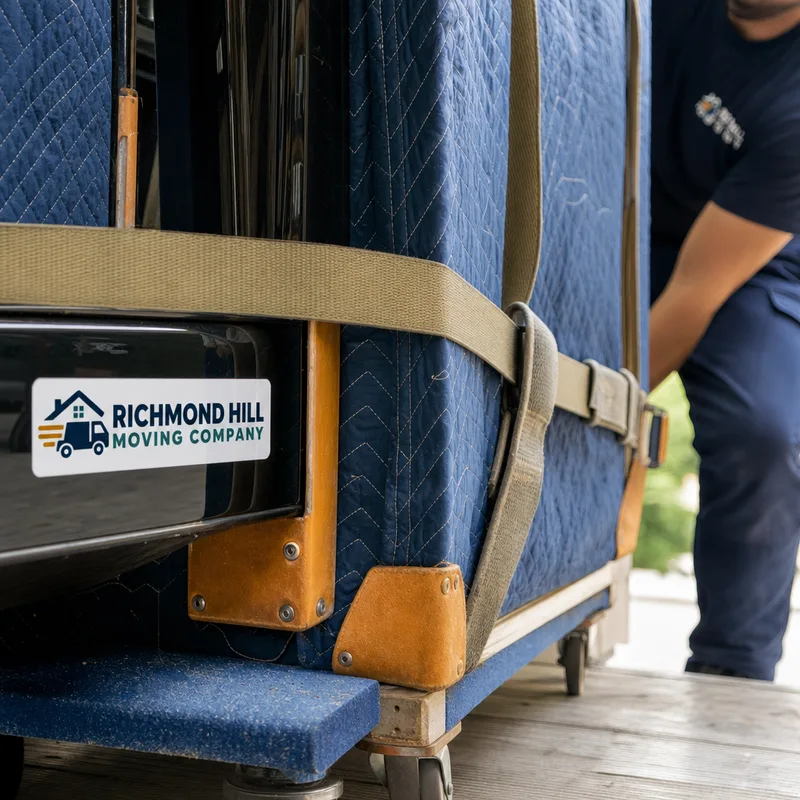
We protect hardwood, tile, and stairs with runners and padding where needed, and we manage door frames and banisters to prevent chips and scuffs during turns.
We check door widths, landings, and tight corners first. If a turn is not workable at a safe angle, we change the plan rather than forcing it.
Stairs are about control, not speed. A strapped skid board, the right number of movers, and clear commands keep the piano stable and reduce shock to the case and action.
For buildings in areas like Langstaff, we factor in elevator sizes, service elevator bookings, hallway protection rules, and time windows so the move stays smooth.
Instrument-specific handling
An upright piano is typically moved upright with a piano dolly, fully padded and strapped, with extra attention at thresholds and stairs. The goal is to keep it stable and avoid sudden drops that can damage the cabinet, internal braces, or casters.
A grand piano move is a different job. In most cases, the lid, music rack, and legs are removed (as appropriate for the model and route), and the piano is secured on its side on a padded skid board. This reduces the height profile for doors and tight hallways and keeps the weight centered and controlled.
For either type, we treat the move as a series of controlled transitions: room to hallway, hallway to stairs, stairs to truck, then the reverse at delivery. Each transition is where damage usually happens, so we slow down, communicate, and keep the instrument strapped and supported.
If your piano is going into a basement, up a flight, or through a narrow entry, share a few photos and basic measurements when booking. It helps us match the crew size and gear to your specific setup and avoid last-minute changes on move day.
Request a Callback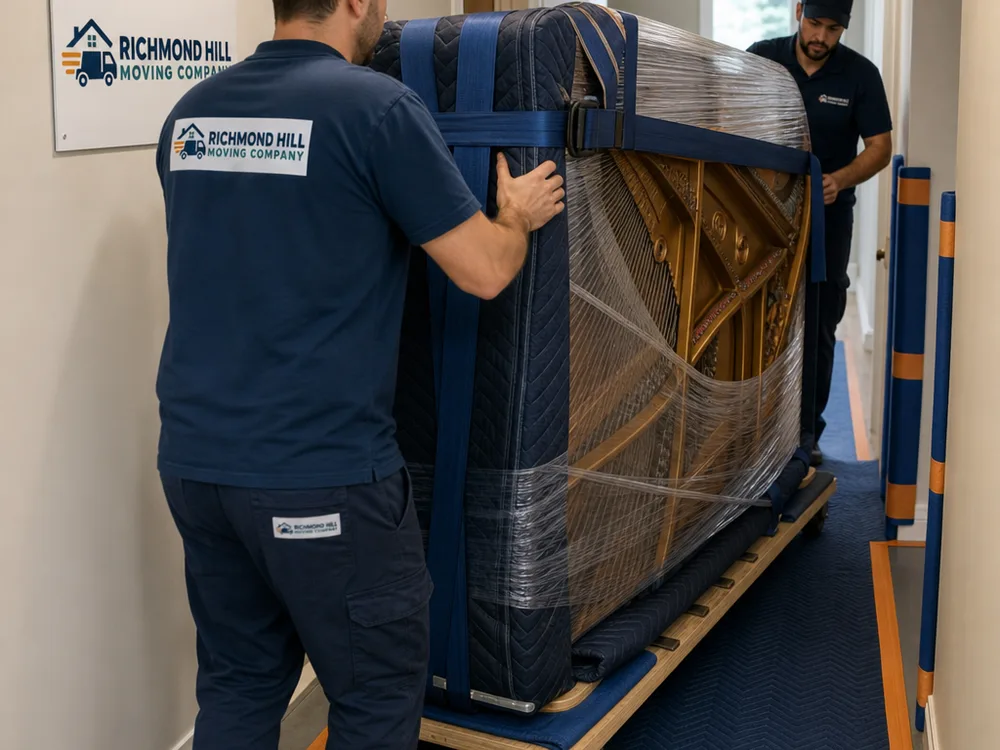
From access check to placement
We confirm piano type, approximate size, pickup and delivery conditions, and any access risks (stairs, tight turns, condos, driveway slope, parking).
On arrival we walk the route, protect floors and corners as needed, and decide where the piano will be staged for the safest exit.
We pad and strap the piano to prevent shifting. For grands, we prep components as required and secure the body to a skid board.
We move slowly through transitions and stairs, keeping the instrument stable and upright or cradled as planned.
We place the piano in the requested room when safe to do so, then remove protection and confirm it is stable, level, and positioned as intended.
Piano moving cost guidance
Most piano moves in Richmond Hill typically range from about $300 to $900+, with simple ground-floor upright moves toward the lower end and grand pianos, stairs, tight turns, or long carries toward the higher end. Complex access or special handling can increase cost.
Final pricing depends on piano type and size, number of stairs, door and hallway width, elevator rules for condos, parking distance, and whether disassembly is needed for a grand. The exact cost is confirmed after we review the move details and access conditions so the crew and equipment match the job.
Protection at every transition


Practical answers
Yes, we move baby grands and full grands as well as uprights in Richmond Hill, Ontario, using the right approach for the instrument and the route. Grand moves typically involve securing the piano on a padded skid board and protecting components so the body stays stable through doors, corridors, and stairs.
Yes, stair moves are possible when the staircase width, turns, and landing space allow safe control. We plan the line of travel, use a strapped skid board when appropriate, and use the right crew size so the piano stays supported at each step and transition.
To quote accurately, we need the piano type (upright or grand), pickup and delivery addresses, stair counts, and any tight access points like narrow halls or sharp turns. Condo moves in Richmond Hill often also require elevator details and any building booking rules so timing and equipment match the building's requirements.
Most pianos need time to settle after a move because vibration and indoor humidity changes can affect tuning. A common approach is to wait about 1 to 2 weeks after delivery before scheduling a tuning, unless your technician recommends a different timeline for your specific instrument and environment.
Yes, many requests are internal moves, such as repositioning an upright, moving to a basement, or changing rooms for renovations. Internal moves still require route planning and protection because tight turns, thresholds, and stair runs are often the biggest risk points.
We protect the travel path with padding and floor runners as needed and use corner protection in tight hallways and stairwells. The piano is wrapped and secured so it does not shift into door frames or railings during turns, and we move slowly through pinch points.
Plan with confidence
Tell us what type of piano you have and what the pickup and delivery access looks like. We will confirm the safest plan, the right crew size, and a clear schedule for your Richmond Hill piano move.